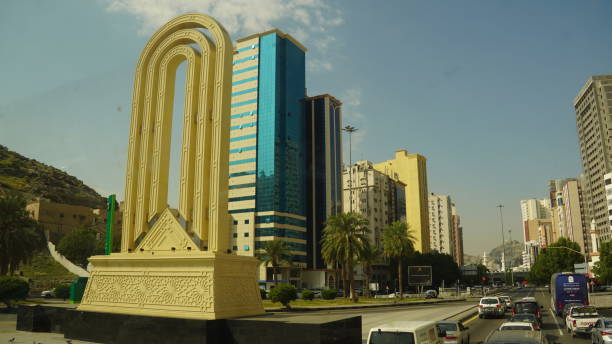
In an era of unprecedented transformation under Saudi Arabia’s national strategic plan Vision 2030, feasibility studies form the foundation upon which large-scale infrastructure investments are evaluated, justified and successfully delivered. As the Kingdom escalates capital deployment across transport, energy, tourism and urban development, feasibility study companies in Saudi Arabia are increasingly engaged to provide quantitative analysis, risk assessment, and economic validation. With infrastructure investment projected at over US$431 billion across giga-projects in the western region alone as of 2025, accurate feasibility studies are integral to aligning project ambitions with financial realities, regulatory frameworks and long-term societal benefits.
Feasibility studies serve as a strategic compass for both public authorities and private investors. In the Kingdom’s evolving landscape where over 382,500 new homes and 330,000 hotel rooms are anticipated by 2030 as part of major giga-projects, feasibility study companies in Saudi Arabia assess market demand, cost profiles, revenue streams and sustainability metrics to ensure that infrastructure ventures deliver measurable value. By quantifying economic returns, environmental impacts and operational risks, these professional evaluations de-risk large commitments, guiding project sponsors to prudent decision-making before groundbreaking begins.
Why Feasibility Studies Are Critical for Saudi Infrastructure
Project Scale and Economic Stakes
Saudi Arabia’s infrastructure pipeline is among the world’s most ambitious, with public and private investments reshaping entire regions. In 2025, the construction market’s infrastructure segment held a 60.26 revenue share, indicating its dominant role in national build-out activity. Projects like the Riyadh Metro expansions, urban redevelopment districts such as Diriyah, and mega aviation hubs like King Salman International Airport carry multi-billion dollar price tags and require extensive justification to satisfy stakeholders across government, financiers and international partners. Feasibility studies provide this critical justification by laying out demand assumptions, capital and operating cost curves, regulatory compliance checklists and sensitivity analyses under varying economic conditions.
Quantifying Demand and Socioeconomic Impact
The meteoric growth of Saudi urban centers amplifies the need for feasibility planning. For example, Riyadh’s population is projected to grow to over 10 million by 2030, driving demand for urban transport, housing and utility infrastructure. Projects like the planned Dammam Metro, with a system length of 50 kilometers and estimated cost of about US$ 16 billion, illustrate how feasibility analysis helps model ridership, revenue projections and financing mechanisms before construction proceeds. Feasibility studies also explore socioeconomic impacts such as job creation and regional development spillovers, aligning infrastructure outcomes with Vision 2030’s broader economic diversification strategy.
Mitigating Risks and Enhancing Investor Confidence
Large infrastructure projects involve inherent risks including cost overruns, schedule delays and regulatory changes. Rigorous feasibility assessments identify risk vectors early and propose mitigation strategies through alternate design options, contractual risk allocation, and phased delivery approaches. This level of scrutiny makes projects more attractive to local and global capital sources by improving predictability and reducing uncertainty. For example, comprehensive scenario analysis can help gauge impacts of macroeconomic variables, such as shifts in global oil prices or currency fluctuations, on projected revenues and operating costs.
Components of a Comprehensive Feasibility Study
Market Analysis and Demand Forecasting
Feasibility studies begin with understanding market dynamics. This includes demographic trends, economic growth forecasts, competition analysis and customer behavior. Tools like regression models and Monte Carlo simulation techniques help estimate demand trajectories and revenue potential over project lifecycles.
Technical and Engineering Evaluation
Technical feasibility focuses on design options, engineering challenges and construction logistics. For large rail networks, airports and utilities infrastructure, this stage evaluates route alignment, materials selection, constructability issues and regulatory standards. Advanced modeling software is often used to simulate performance under varying environmental and operational scenarios.
Financial Modeling and Funding Structures
Financial feasibility assesses capital requirements, operating costs, revenue projections and funding sources. Typical deliverables include proforma cash flows, net present value (NPV) analysis and internal rate of return (IRR) for potential investors. These financial models incorporate sensitivity tests to understand how changes in inputs like financing costs or tariff structures impact project viability.
Environmental and Social Impact Assessments
Modern feasibility studies integrate environmental and social dimensions, ensuring compliance with sustainability criteria and stakeholder expectations. Projects must address ecological footprints, carbon emissions, community resettlement impacts and regulatory compliance with Saudi environmental standards. Many infrastructure evaluations include mitigation strategies to ensure projects support long-term sustainability goals.
Case Studies in Saudi Infrastructure Feasibility
Riyadh Metro Expansion
The Riyadh Metro project, one of the most complex urban transit programs globally, undertook extensive feasibility and scenario planning before execution. With expansion phases announced that extend coverage by tens of kilometers and integrate advanced signalling systems, feasibility studies evaluated projected ridership, integration with other transit modes and revenue outcomes. This helped secure financing and align the project with broader urban mobility strategies.
Diriyah Cultural District
In the historic Diriyah redevelopment, feasibility analysis assessed tourism attraction levels, heritage conservation sensitivities, and economic impacts. Forecasts projected that Diriyah could welcome millions of tourists annually and generate significant revenue across hospitality, retail and cultural services. These insights were crucial in structuring phased development and aligning public and private investment partners.
King Salman International Stadium
Projected to host events including finals for global sporting occasions, King Salman International Stadium’s feasibility assessment examined event scheduling, crowd management logistics, transport access and ancillary revenue streams such as hospitality and tourism. Such detailed evaluations underpin investor confidence and ensure operational readiness when the project opens.
Emerging Trends Shaping Feasibility Practice in Saudi Arabia
Digital Infrastructure and Smart City Analytics
Feasibility practices are rapidly adopting digital and artificial intelligence tools to enhance accuracy. Predictive analytics, integrated data platforms and digital twins allow study teams to simulate real-world performance of infrastructure systems and model complex interactions between urban growth, demand patterns and service delivery. This integration is particularly relevant for smart city initiatives where data interoperability and real-time monitoring influence infrastructure performance.
Sustainability Integration
Environmental considerations are a growing priority in feasibility work, especially as Saudi Arabia commits to climate-aligned development and renewable energy integration. Battery storage capacity installations reached nearly 3 gigawatts in 2025, placing the Kingdom among the top global adopters in this sector and signaling how energy feasibility assessments are incorporating renewable integration, grid stability and decarbonization planning.
Public Private Collaboration
Public private partnerships are increasingly used as implementation models for complex infrastructure. Feasibility studies tailored for PPPs include contract design, risk sharing analysis and value for money assessments to ensure that projects deliver optimal outcomes for both the public sector and private investors.
Measuring Success and Delivering Value
Success in feasibility work is measured by how effectively a study informs constructive decision making and minimizes the risk of costly mid-course corrections. Projects that undergo comprehensive feasibility assessment are more likely to stay on budget, meet time-to-completion targets and deliver the intended economic and social benefits. Saudi Arabia’s infrastructure agenda, valued collectively in the hundreds of billions of dollars and encompassing projects across regions and sectors, relies on this level of analytical rigor.
In conclusion, feasibility studies are indispensable for supporting the Kingdom of Saudi Arabia’s large-scale infrastructure needs, ensuring that projects are economically viable, technically sound, financially robust and socially responsible. As Saudi Arabia continues to pursue transformative infrastructure investment with US$431 billion in announced projects and ongoing expansions of urban, transport and energy systems, feasibility study companies in Saudi Arabia remain at the forefront of strategic planning and investment validation. Their expertise enables stakeholders to make data-driven decisions, mitigate risks and harness opportunities that align with national growth objectives. With the country embracing digital analytics and sustainability principles, the role of expert feasibility assessment will only grow further. Ultimately, partnering with reputable feasibility study companies in Saudi Arabia ensures that infrastructure projects deliver enduring value for the Kingdom and its future generations.
 Finance Advisory