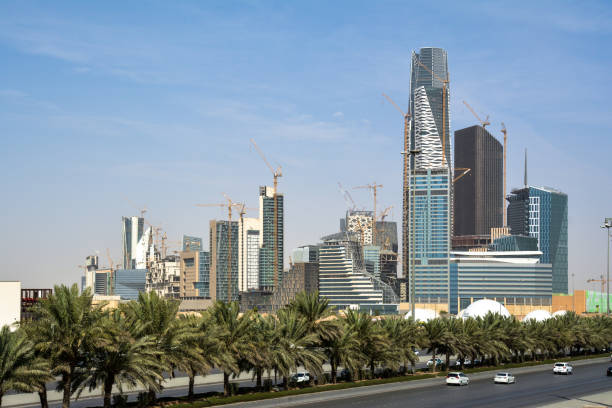
In the dynamic and ambitious landscape of modern project management, where capital is substantial and stakes are high, the disciplined practice of conducting a comprehensive feasibility study stands as the most critical determinant between success and failure. This analytical process is not a bureaucratic hurdle but a strategic investment, systematically de-risking initiatives and illuminating the path to viable outcomes. For leaders and investors in the Kingdom of Saudi Arabia, where transformative national projects under Vision 2030 are reshaping the economic and social fabric, the rigor of a Feasibility Study in Saudi Arabia has never been more pertinent. It is the foundational tool that translates visionary goals into executable, profitable, and sustainable realities, ensuring that the Kingdom’s monumental investments yield the intended returns.
Understanding the Core Components of a Feasibility Study
A feasibility study is a multi-dimensional analysis designed to objectively and rationally uncover the strengths and weaknesses of a proposed project, the resources required to execute it, and the ultimate prospects for success. It is a reality check performed before significant resources are committed. Its core components create a holistic view of the project’s potential.
- Market and Technical Analysis: This dual-pronged assessment investigates both demand and deliverability. The market analysis evaluates the target audience, size, growth potential, competitive landscape, and regulatory environment. Concurrently, the technical analysis examines the practical requirements: technology needs, material availability, required manpower, site suitability, and logistical frameworks. In the context of giga-projects, this means assessing not only if tourists will visit but also if the infrastructure to support them can be built efficiently.
- Financial and Economic Viability: The financial model is the quantitative heart of the study. It projects costs, revenues, cash flows, and profitability metrics such as Net Present Value (NPV), Internal Rate of Return (IRR), and payback period. Beyond direct financial returns to investors, an economic feasibility study may also consider broader impacts like job creation, GDP contribution, and economic diversification, a key pillar for Saudi Arabia’s future.
- Legal, Regulatory, and Operational Assessment: This component ensures the project can operate within the legal and regulatory framework. It covers licensing, permits, environmental regulations, zoning laws, and labor policies. Furthermore, it outlines the organizational structure and management capabilities needed to run the project post-delivery, identifying potential operational bottlenecks before they occur.
- Risk and Scheduling Analysis: A robust study proactively identifies potential risks, financial, technical, market-based, or political, and proposes mitigation strategies. It also develops a preliminary timeline, identifying critical paths and major milestones, which forms the basis for detailed project planning.
By synthesizing these elements, a feasibility study provides decision-makers with a clear, evidence-based “go/no-go” recommendation, preventing the costly pursuit of inherently flawed concepts.
Alignment with Saudi Vision 2030 and National Priorities
The Saudi Vision 2030 blueprint presents a bold roadmap for economic diversification, social development, and global engagement. Its realization hinges on the successful execution of hundreds of interlinked mega-projects across sectors like tourism, entertainment, logistics, and renewable energy. Here, the feasibility study transitions from a business tool to a national strategic asset.
For instance, projects within NEOM, the Red Sea Global, or Qiddiya are unprecedented in scale and complexity. A superficial Feasibility Study in Saudi Arabia for such initiatives would be catastrophic. Instead, these projects require hyper-detailed analyses that consider long-term sustainability, global market positioning, technological innovation (like AI and IoT integration), and socio-cultural impacts. The study must answer not only “Can we build it?” but “Will it thrive for decades in a competitive global market?” and “How does it advance the Kingdom’s strategic objectives?”
This alignment ensures that every riyal invested contributes directly to the three Vision 2030 pillars: a vibrant society, a thriving economy, and an ambitious nation. It prevents misallocation of resources and ensures that projects like the Diriyah Gate development or the King Salman International Airport expansion are not just architectural marvels but also enduring economic engines.
Quantitative Insights: The Data-Driven Case for Rigorous Analysis
The empirical evidence supporting thorough feasibility studies is compelling. Industry benchmarks consistently show that projects which undergo formal feasibility analysis have a significantly higher probability of meeting their objectives. Consider these forward-looking projections and data points relevant to the Saudi context:
- A 2026 report by the Global Project Management Institute projects that initiatives incorporating advanced, data-rich feasibility studies will see their success rates climb to approximately 85%, compared to a meager 40% for projects that proceed with only a basic business case. For Saudi Arabia, where project portfolios exceed $1 trillion, this delta represents hundreds of billions in potential value preservation.
- In the domain of digital transformation, a key focus for Saudi Arabia, the anticipated total corporate and government expenditure on cloud, AI, and cybersecurity projects in the Kingdom is forecast to reach $35 billion annually by 2026. Without feasibility studies that rigorously assess integration challenges, talent gaps, and cybersecurity postures, a significant portion of this investment risks underperformance.
- Regarding sustainable infrastructure, a prerequisite for projects like NEOM’s THE LINE, feasibility studies that meticulously model energy consumption, water recycling, and circular economy principles are expected to reduce lifecycle operational costs by an estimated 30-50% compared to conventional designs, as per 2026 analyses by leading engineering consultancies.
- The Saudi Arabian government’s commitment to privatizing sectors and attracting Foreign Direct Investment (FDI) hinges on investor confidence. A professionally prepared Feasibility Study in Saudi Arabia serves as a credible prospectus, transparently outlining risks and returns. This practice is directly correlated with the Kingdom’s goal to increase FDI to over $100 billion annually by 2030, as it lowers the perceived risk premium for international partners.
These figures underscore that the cost of a feasibility study, typically ranging from 0.5% to 2% of total project cost, is minuscule compared to the cost of failure, which can involve total capital loss, reputational damage, and strategic setbacks.
Implementing Best Practices for Saudi Projects
To fully harness the power of feasibility studies, Saudi project sponsors and leaders must institutionalize several best practices. First, studies must be initiated at the earliest conceptual stage and must be conducted by independent, multidisciplinary teams with both local market expertise and global best practice knowledge. Second, the scope must be tailored to the project’s scale and complexity; a study for a new manufacturing plant in Ras Al Khair will differ from one for a luxury tourism resort on the Red Sea coast. Third, the analysis must incorporate scenario planning, modeling outcomes under various economic, regulatory, and market conditions to test the project’s resilience.
Most importantly, the findings must be embraced by leadership. The purpose of a Feasibility Study in Saudi Arabia is to inform courageous, evidence-based decision-making, even if that decision is to stop a pet project. This intellectual discipline is the hallmark of mature, world-class project governance.
Visionary Leadership
The journey toward the ambitious horizons of Vision 2030 is paved with decisions of monumental consequence. In this context, the comprehensive feasibility study is not merely an administrative step, it is an expression of strategic wisdom and fiduciary responsibility. It is the process that ensures the Kingdom’s vast resources amplify its vision rather than dissipate it.
Therefore, the call to action for Saudi Arabia’s public and private sector leaders, project sponsors, and investment authorities is unequivocal. Champion and mandate the highest international standards for pre-project analysis. Allocate the necessary resources and time to conduct these studies with depth, objectivity, and rigor. Treat them as the indispensable strategic compass for navigating the complexities of modern large-scale development.
By institutionalizing this practice, you do more than enhance the probability of success for individual projects. You build a legacy of prudent stewardship, attract quality global investment, and cement the Kingdom’s reputation as a place where vision is matched by executional excellence. The future of Saudi Arabia is being built today. Ensure every foundational stone is laid upon the solid ground of proven feasibility.
 Finance Advisory