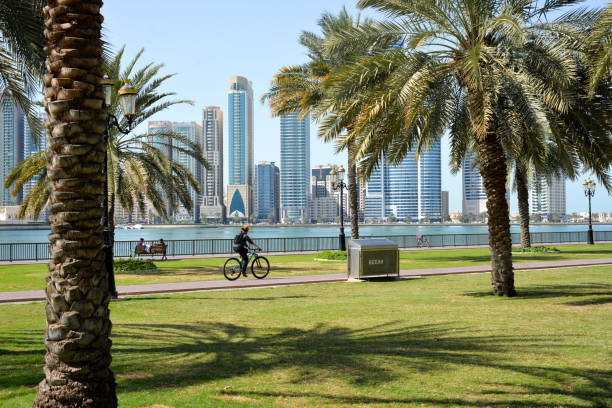
The United Arab Emirates has entered 2026 with remarkable economic momentum, presenting both unprecedented opportunities and complex challenges for investors and business leaders. Understanding the specific market dynamics, regulatory environment, and sectoral trends that define the UAE landscape is essential for any feasibility study to deliver actionable, accurate results. Professional feasibility study consultants in UAE bring this localized expertise to every engagement, ensuring that financial projections, risk assessments, and operational plans reflect the reality of doing business in one of the world most dynamic economies. For the Target Audience UAE, including investors, entrepreneurs, and corporate decision makers across all seven emirates, this synthesis of current insights provides the foundation for feasibility study success.
The macroeconomic foundation for investment decisions in 2026 is robust yet nuanced. World Bank projections indicate that the UAE economy will expand by 5 percent in 2026, followed by 5.1 percent growth in 2027, driven by robust activity in trade, tourism, logistics, manufacturing, real estate and financial services . The International Monetary Fund has echoed this broadly positive outlook, projecting that Gulf Cooperation Council economies will continue to outperform many emerging and advanced markets in 2026, supported by strong fiscal buffers, high public investment spending and structural reforms aimed at strengthening private sector participation . Non oil sectors now account for the bulk of economic activity, with tourism arrivals reaching record levels, trade volumes expanding and digital transformation reshaping financial services and logistics .
The Real Estate Sector as a Growth Barometer
The UAE real estate sector has posted exceptional performance in the first quarter of 2026, serving as a reliable indicator of broader economic confidence and capital flows. Dubai continued to show strong market activity, with the Dubai Land Department recording 718,160 real estate transactions, including 60,303 disposals, up 6 percent year on year . The total value of transactions rose 31 percent to AED 252 billion (USD 68.6 billion), while investments increased 7 percent to 57,744, with a combined value of AED 173 billion . The investor base also expanded to 48,448 investors, up 8 percent, including 29,312 new investors, a 14 percent increase from Q1 2025 .
For feasibility study consultants in UAE, this data signals several critical insights. The concentration of high end residential transactions reaching AED 87.7 billion with trophy assets fetching record prices above AED 422 million indicates that luxury segments continue to attract significant capital . International trust remains the bedrock of this growth, with foreign investment rising by 26 percent and a notable 14 percent increase in new investors choosing the UAE as a stable destination for long term capital deployment . Any feasibility study for a real estate venture must account for this international demand while also evaluating the competitive positioning of the specific project within a rapidly evolving market.
Abu Dhabi has emerged as perhaps the most dramatic success story of the 2026 landscape. The capital recorded a sharp 160.7 percent growth in real estate transactions, totaling AED 66 billion (USD 18 billion), compared with AED 25.31 billion in the same period last year . More than 13,518 transactions were executed, up from 6,896 in Q1 2025, reflecting accelerated growth and reinforcing Abu Dhabi position as a regional and global investment hub . Under the stewardship of the Abu Dhabi Real Estate Centre, the city has successfully pivoted toward ultra luxury island living, with Hudayriyat Island emerging as the top performing district, followed closely by the cultural hubs of Saadiyat and Yas Islands . Foreign direct investment in Abu Dhabi surged by more than 400 percent compared to Q1 2025, signaling that the capital is carving out its own distinct identity as a premier global residential hub .
Sharjah recorded its strongest quarterly performance in recent years, with trading value hitting AED 18.5 billion, up 40.7 percent, while the Sharjah Real Estate Registration Department said the diversity of investor nationalities increased to 113 compared with 97 in 2025 . UAE nationals accounted for about AED 9 billion in trading value across 10,099 properties, while GCC, Arab and other foreign investors contributed around AED 9.5 billion across 19,136 properties . This broad based participation across multiple emirates and investor nationalities suggests that the UAE property market has achieved genuine depth and resilience. Professional feasibility study consultants in UAE incorporate this emirate level granularity into their analysis, recognizing that opportunities vary significantly across geography.
Tourism and Hospitality Sector Expansion
The UAE continues to lead the Gulf Cooperation Council region in tourism growth, an insight with profound implications for feasibility studies in hospitality, retail, entertainment, and related sectors. The GCC region experienced an extraordinary surge in tourism revenue, reaching a record USD 120.2 billion in 2026, representing a 39.6 percent increase from pre pandemic levels in 2019 . With international arrivals soaring to 72.2 million in 2026, the region has recorded a 51.5 percent increase compared to 2019 with a 6.1 percent rise year on year .
The UAE has been the driving force behind this tourism boom, renowned for its strategic role as a global aviation hub . Dubai and Abu Dhabi continue to register record visitor numbers driven by expanding airline capacities and increased international events . With world class shopping, iconic landmarks, and a wide range of entertainment options, the UAE has successfully attracted millions of visitors in recent years . For investors considering hotel developments, theme parks, retail destinations, or related ventures, these tourism figures provide the demand validation necessary for credible financial projections.
Renewable Energy and Sustainability Investments
The UAE commitment to clean energy transition represents one of the most significant long term investment themes shaping the national economy. The Minister of Energy and Infrastructure announced at Abu Dhabi Sustainability Week 2026 that installed renewable energy capacity has now exceeded 7.7 gigawatts . Projects currently under development will raise total capacity to more than 23 gigawatts by 2031, reflecting the rapid pace of transformation in the national energy system . National investments in the renewable and clean energy sector have surpassed AED 190 billion (USD 51 billion), demonstrating the high level of confidence placed in this vital sector as a key driver of sustainable development and low emissions economic growth .
The UAE has raised its national target for electricity generation from clean energy sources to 35 percent by 2031 . Installed renewable energy capacity recorded growth of 117 percent between 2022 and 2025, reflecting the effectiveness of national policies and the accelerated implementation of strategic projects . For feasibility studies focused on renewable energy projects, green technology ventures, or sustainability oriented businesses, these figures provide both market validation and a clear regulatory direction. The integration of the National Hydrogen Strategy 2050 into the country comprehensive energy planning framework further signals the long term commitment to a low carbon future .
The Critical Role of Professional Feasibility Analysis
A rigorous feasibility study in the current environment must go beyond standard financial metrics to address the specific uncertainties facing businesses today. Professional feasibility study consultants in UAE structure their analysis around scenario planning that accounts for rapid stabilization, prolonged regional disruption, and wider escalation scenarios that could reshape the operating environment entirely . They examine whether cost assumptions hold when energy prices fluctuate, identify critical supply chain dependencies, calculate break even points under various conditions, and assess whether capital deployment phases remain viable across different time horizons .
The businesses that will succeed in this environment are not necessarily the ones with the deepest pockets, but the ones that validated their assumptions before committing and adjusted when those assumptions changed . A comprehensive feasibility study encompasses multiple interconnected elements. Market feasibility evaluation involves in depth research into potential customers, competitor businesses, and various business models to compare features, pricing, and positioning . Technical feasibility examines labor requirements, raw material needs, office location attributes, technological infrastructure, and required skillsets . Financial feasibility reviews all monetary requirements including funding sources, types of funds, cash flow forecasts, and computes key metrics such as Net Present Value, Return on Investment, Return on Equity, and Annual Recurring Revenue . Legal feasibility ensures that the proposed business model fits within UAE laws and regulations, accommodating all needs under the appropriate legal framework .
Economic Growth Projections and Their Implications
The economic growth trajectory for the UAE remains positive despite regional headwinds. The IMF has projected that GCC economies will continue to benefit from strong fiscal buffers, high public investment spending, and structural reforms aimed at strengthening private sector participation . The UAE role as a regional trade and financial hub is supported by continued reforms, liberalized business regulations, and investment friendly policies that help attract global capital and talent flows . Major public and private investments in artificial intelligence, manufacturing, and advanced technology are also expected to support medium term growth while reinforcing the country competitiveness .
The UAE non oil sectors now account for the bulk of economic activity, with trade volumes expanding and digital transformation reshaping financial services and logistics . For investors evaluating opportunities, this structural shift away from oil dependence creates more predictable, sustainable growth patterns that support long term investment horizons.
Regulatory and Compliance Considerations
Operating in the UAE requires navigating a sophisticated regulatory environment that varies across emirates and economic zones. Free zones offer specific advantages including foreign ownership, customs duty exemptions, and simplified incorporation procedures, but may restrict business activities to certain sectors or geographic markets. Mainland companies can trade throughout the UAE but must comply with commercial company law requirements regarding local ownership for certain activities. Professional consultants in UAE bring detailed knowledge of these regulatory frameworks to every engagement, ensuring that the legal structure recommended aligns with both business objectives and compliance requirements.
The Path to Informed Investment Decisions
The UAE market in 2026 offers compelling opportunities across multiple sectors including real estate, tourism, renewable energy, technology, logistics, and financial services. The quantitative evidence from Q1 2026 demonstrates record setting performance in property transactions, tourism arrivals, and renewable energy capacity expansion. However, successful investment requires more than identifying these positive trends. It demands rigorous analysis of how a specific venture will compete, generate returns, and manage risks within this dynamic environment.
Feasibility study consultants in UAE provide the specialized expertise necessary to translate these market insights into actionable investment decisions. They understand the local nuances that generic consultants miss, from emirate level regulatory variations to the cultural factors that influence consumer behavior. For investors committed to success in one of the world most dynamic economies, partnering with consultants who possess deep UAE market knowledge is not an optional expense but an essential investment in decision quality and risk management. The insights presented here from real estate transaction data, tourism statistics, renewable energy targets, and economic growth projections form the foundation upon which successful feasibility studies are built.
 Finance Advisory