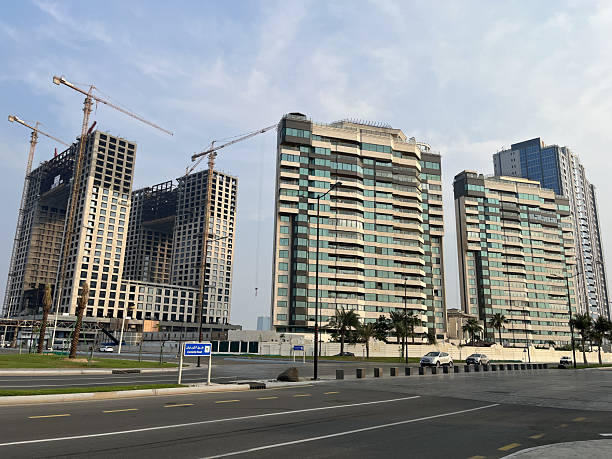
The economic transformation underway in the Kingdom of Saudi Arabia has created an environment where businesses must scale rapidly to meet Vision 2030 targets. As companies expand across regions such as Riyadh, Jeddah, and Dammam, the demand for precise financial oversight becomes critical. A professional accounting and bookkeeping service ensures that growing enterprises maintain accurate records, comply with ZATCA regulations, and make data driven decisions. Without structured financial management, expansion often leads to cash flow issues, compliance penalties, and missed investment opportunities.
The Role of Financial Infrastructure in KSA Business Growth
Saudi Arabia’s non oil economy grew by 4.2 percent in the first quarter of 2026, according to the General Authority for Statistics. This growth has triggered a 28 percent increase in new commercial registrations compared to 2025. Small and medium enterprises now contribute 34 percent of the national GDP, up from 28 percent in 2023. For these businesses to sustain their upward trajectory, they must embed professional financial workflows from the start. A reputable Financial consultancy Firm provides the strategic layer that turns raw transactional data into actionable growth intelligence. These firms help organizations structure their general ledgers, reconcile bank statements, and prepare internal management reports that highlight profitability by product line or branch. When a business opens a second warehouse in Jubail or a new retail outlet in Neom, the volume of invoices, payroll entries, and supplier payments multiplies. Without a systematic approach, errors creep in, and management loses visibility.
Aligning Bookkeeping with ZATCA E Invoicing Mandates
The Zakat, Tax and Customs Authority has enforced phase two of e invoicing integration since January 2026. All VAT registered entities must now issue and store invoices in a structured electronic format linked to ZATCA’s Fatoora platform. Failure to comply results in fines up to SAR 50,000 per violation. For expanding companies, this mandate adds complexity because each new branch or subsidiary requires separate integration. An accounting and bookkeeping service that specializes in KSA tax law ensures that every e invoice includes the correct QR code, timestamp, and cryptographic stamp. Moreover, these services automate the reconciliation between issued invoices and bank deposits, reducing the risk of revenue leakage. A 2026 survey by the Saudi Institute of Internal Auditors found that 63 percent of mid sized firms cited e invoicing compliance as their top financial challenge during expansion. Professional bookkeeping resolves this by embedding ZATCA rules directly into the chart of accounts and monthly closing procedures.
Quantitative Impact of Professional Accounting on Expansion Success
Data from the Saudi Ministry of Investment indicates that companies using outsourced financial management grow 1.7 times faster than those relying on internal, untrained staff. In 2026, the average cost of a bookkeeping error for a mid sized distributor was SAR 87,000, including penalties and restatement fees. Conversely, organizations that engaged a formal bookkeeping service reduced their monthly closing cycle from 18 days to 6 days on average. Speed in closing books allows management to secure expansion financing more quickly. Banks in KSA now request 24 months of audited or reviewed financials for commercial loans above SAR 2 million. Without clean, timely records, a business may miss a strategic acquisition or a real estate lease in a high growth zone like King Abdullah Economic City. Additionally, 2026 figures from the Saudi Credit Bureau show that companies with professionally maintained books enjoy 22 percent lower interest rates on working capital facilities because lenders perceive them as lower risk.
Strategic Budgeting and Cash Flow Forecasting for Multi Branch Operations
Expanding across multiple KSA cities introduces cash flow fragmentation. A retail chain with stores in Riyadh, Jeddah, and Dammam faces different rent cycles, local supplier payment terms, and seasonal demand patterns. A Financial consultancy Firm helps consolidate these variables into a single rolling forecast. Using historical data from the bookkeeping module, consultants build 13 week cash flow models that predict liquidity gaps before they occur. In 2026, the average expansion oriented company in KSA held 23 percent more idle cash than necessary, according to a study by the Jeddah Chamber of Commerce. Strategic forecasting reduces that idle cash to 8 percent, freeing capital for inventory, hiring, or marketing. Furthermore, consultancy firms guide businesses on whether to establish a branch versus a separate subsidiary, based on tax implications and liability exposure. This decision alone can save SAR 300,000 annually in compliance and filing fees for a business with three regional offices.
Regulatory Compliance Across Multiple Jurisdictions
While KSA has a unified company law under the Ministry of Commerce, municipalities such as Makkah, Eastern Province, and Tabuk enforce local fee structures and inspection requirements. A bookkeeping system that tags expenses by municipality and cost center allows a business to accurately allocate local levies. For example, the municipality fee for commercial activity in Riyadh increased by 1.5 percent in 2026, while Jeddah introduced a seasonal waste management surcharge. Without granular bookkeeping, a company might overpay or under report these obligations. An accounting service trained in regional variances ensures that each entity’s financial statements reflect the correct deductions. Additionally, the Saudi Labor Law now requires companies with more than 50 employees to submit quarterly wage protection reports. Expansion often pushes headcount past this threshold. Professional bookkeepers automate wage protection data extraction from payroll ledgers, ensuring timely submission to the Ministry of Human Resources. Non compliance penalties for late submissions reached SAR 12,000 per occurrence in 2026.
Leveraging Cloud Accounting for Real Time Multi User Access
The days of desktop based spreadsheets are over for scaling KSA businesses. Cloud platforms like Zoho Books, QuickBooks Online, and Odoo have gained 41 percent market share in the Kingdom between 2024 and 2026, as reported by the Saudi Digital Economy Council. A modern accounting and bookkeeping service implements these platforms with role based access for the CEO, sales manager, warehouse supervisor, and external auditor. Real time data means that when a logistics manager in Dammam receives a shipment, the cost of goods sold updates instantly in the profit and loss statement viewed by the CFO in Riyadh. This immediacy supports just in time expansion decisions. For instance, if gross margins on a particular product line drop below 18 percent during the first week of a new branch opening, management can adjust pricing or supplier terms without waiting for month end reports. In 2026, companies using integrated cloud accounting reduced their decision latency from 45 days to 5 days, directly improving their ability to capture market share.
Managing Payroll and Employee Reimbursements Across Regions
Expansion brings workforce dispersion. A construction firm operating in Neom, a technology startup in Riyadh’s King Abdullah Financial District, and a manufacturing unit in Jubail each face different transportation allowances, housing supplements, and overtime regulations. The Ministry of Human Resources reported in 2026 that payroll errors accounted for 34 percent of all labor complaints filed by employees in expanding companies. Accurate bookkeeping ensures that each employee’s compensation package is coded to the correct cost center and complies with region specific adjustments. Moreover, the General Organization for Social Insurance (GOSI) requires monthly submission of contribution data. Late or incorrect submissions incur a 2.5 percent penalty on the unpaid amount. A professional accounting automates these submissions directly from the payroll journal, eliminating manual re entry. For a business growing from 30 to 120 employees over 12 months, this automation saves approximately 160 hours of finance staff time annually, equivalent to SAR 45,000 in labor costs.
Inventory Accounting and Cost of Goods Sold for Scaling Retailers
Retail and wholesale expansion introduces inventory complexity. A business moving from one warehouse to three distribution centers must adopt a perpetual inventory system. The Saudi Chamber of Commerce’s 2026 retail report noted that 52 percent of expanding retailers overstate their gross profit because they fail to accurately allocate freight, handling, and customs duties to specific batches of inventory. Professional bookkeeping solves this by implementing specific identification or weighted average cost methods suitable for each product category. Additionally, periodic physical counts must reconcile with perpetual ledgers. Discrepancies often signal theft, spoilage, or supplier short shipments. For a grocery chain with ten stores, an annual shrinkage rate of 1.8 percent represents SAR 2.3 million in lost value. A robust bookkeeping service flags shrinkage trends by product category and store location, enabling targeted loss prevention. Without this granularity, expansion multiplies losses instead of profits.
Financial Reporting for Investor and Partner Confidence
Expanding companies frequently seek external capital from the Saudi Venture Capital Company or private angel networks. Investors in 2026 demand quarterly financial packages that include balance sheets, income statements, cash flow statements, and aging reports for receivables and payables. A survey of 150 KSA based investors found that 78 percent rejected funding applications because the target company’s books were not audit ready. An accounting and bookkeeping service produces these reports using International Financial Reporting Standards (IFRS) as adopted in Saudi Arabia. Moreover, they prepare supporting schedules for fixed assets, prepaid expenses, and accrued liabilities. Investors also examine accounts receivable turnover. The 2026 median turnover for KSA SMEs was 47 days, but companies using professional bookkeeping achieved 32 days. Faster turnover indicates better credit control and liquidity, directly influencing valuation multiples. A business with clean books and fast turnover can command a 15 to 20 percent higher valuation during a Series A round.
Technology Integration Between Operations and Finance
Expansion often involves adopting new operational software such as point of sale systems, warehouse management systems, or customer relationship management platforms. Each system generates financial transactions that must flow into the general ledger. Manual data entry creates delays and transcription errors. A forward looking bookkeeping service uses application programming interface (API) connectors to sync operational data directly with accounting software. For example, every sale recorded at a POS terminal in a Jeddah boutique posts automatically as revenue with a corresponding cost of goods sold entry. In 2026, businesses with fully integrated systems reduced their monthly reconciliation time by 75 percent compared to those using manual entry. Furthermore, integration enables real time profitability analysis by channel. If an online store’s marketing spend leaps by 40 percent but sales only rise by 10 percent, the system alerts management immediately. This speed protects margins during expansion phases when costs can easily outrun revenue.
Risk Mitigation Through Segregation of Duties and Internal Controls
As a company expands, the risk of fraud or unauthorized transactions increases. The Saudi Anti Corruption Authority recorded a 19 percent rise in reported commercial fraud cases in 2026, many involving employees who had overlapping financial responsibilities. Professional bookkeeping enforces segregation of duties. One person records receipts, another authorizes disbursements, and a third reconciles the bank statement. Even in a small company, a reputable accounting service implements approval workflows for purchases above SAR 10,000. Additionally, they conduct monthly surprise reconciliations of petty cash and review all journal entries for unusual patterns. For a logistics firm with six regional depots, these controls reduced fraudulent fuel card usage by 67 percent within six months of implementation. The cost of these controls is minimal compared to the potential loss. A single instance of payroll fraud of SAR 200,000 could erase the entire profit of one branch for a quarter.
Preparing for Audit and Corporate Tax Compliance
The Saudi tax authority has increased audit frequency for companies that have grown revenue by more than 30 percent year over year. In 2026, 41 percent of expanding businesses received a tax audit notice, compared to 18 percent of stable businesses. An audit ready bookkeeping system maintains a complete trail from source document to financial statement. Each supplier invoice, customer receipt, and bank transfer is linked to a journal entry with supporting attachments. ZATCA now assesses penalties of 25 percent of the underpaid tax if records are deemed insufficient. Professional bookkeepers ensure that VAT returns, withholding tax certificates, and transfer pricing documentation are prepared within statutory deadlines. For a manufacturing firm adding a second production line, the corporate income tax rate remains at 20 percent on net profit, but deductible expenses must be properly substantiated. Without rigorous bookkeeping, valid deductions are disallowed, raising the effective tax rate. In 2026, the average tax assessment increase for poorly documented expanding companies was SAR 145,000 per year.
Performance Benchmarking Against Industry Peers
Expansion is more likely to succeed when management compares key performance indicators (KPIs) against sector benchmarks. The Saudi Small and Medium Enterprise Bank publishes quarterly benchmarks for gross margin, operating expense ratio, and working capital days. A business with professional bookkeeping can compute its own KPIs and compare them directly. For example, the 2026 benchmark for gross margin in the wholesale building materials sector is 24 percent. If a company’s books show 18 percent, management investigates procurement, pricing, or wastage. Without accurate comparative data, the company continues expanding a flawed model. Furthermore, banks and investors increasingly request benchmarked financials as part of due diligence. A 2026 study by the Saudi British Bank found that companies providing benchmarked data received loan approvals 22 days faster than those providing only raw numbers. The accounting and bookkeeping service prepares these KPI dashboards monthly, turning raw transactions into strategic intelligence.
Scalable Fee Structures for Growing Enterprises
One concern business owners raise is whether professional bookkeeping becomes prohibitively expensive as they expand. In practice, reputable providers in KSA offer tiered pricing based on transaction volume, number of bank accounts, and employee count. For a business processing 500 invoices per month, the average fee in Riyadh in 2026 is SAR 4,500 monthly. At 2,000 invoices, the fee rises to SAR 9,000 monthly, which represents only a 100 percent fee increase for a 300 percent increase in activity. This scalability is far more cost effective than hiring an internal finance manager at SAR 25,000 monthly plus benefits, office space, and software licenses. Additionally, outsourced services provide continuity during employee sick leave or turnover. A business that relies on one internal accountant faces disaster if that person resigns without proper handover. Professional firms maintain team based coverage and cloud based records, ensuring zero downtime. For a healthcare startup expanding to three clinics, this continuity proved critical during a ZATCA audit that demanded five years of purchase ledgers within ten working days. The outsourced team delivered the files in 48 hours.
 Finance Advisory